
The aim of Resilient Schools is to strengthen the social and emotional foundations children need to thrive in learning and life.
A practical, concept-based approach that engages early learning centres in nurturing every child's emotional well-being and resilience from the earliest stage of life.
Supporting Children's social and emotional development has never been more important!
Resilient Schools focuses on the unseen skills of learning, thinking, emotions, behaviours and attitudes.
This new of engaging shapes how children respond to challenge and every experience they have.
Educators support emotional regulation, behaviour, and social development, sometimes without clear, practical tools that fit into everyday learning.
What if we started intentionally teaching children the skills of...
Confidence
Wellbeing
Connection
Resilience
Resilience begins in the early years through connecting with the childrens:
Identity
Developing self-awareness through personal strengths
Emotional Awareness
Every interaction shapes how a child feels and responds.
Classroom participation
Active Engagement in and with learning
Relationships
Connecting through friendships and social engagement
Empathy & Kindness
Caring & Helping Others
Community & Belonging
Feeling connected and part of a group
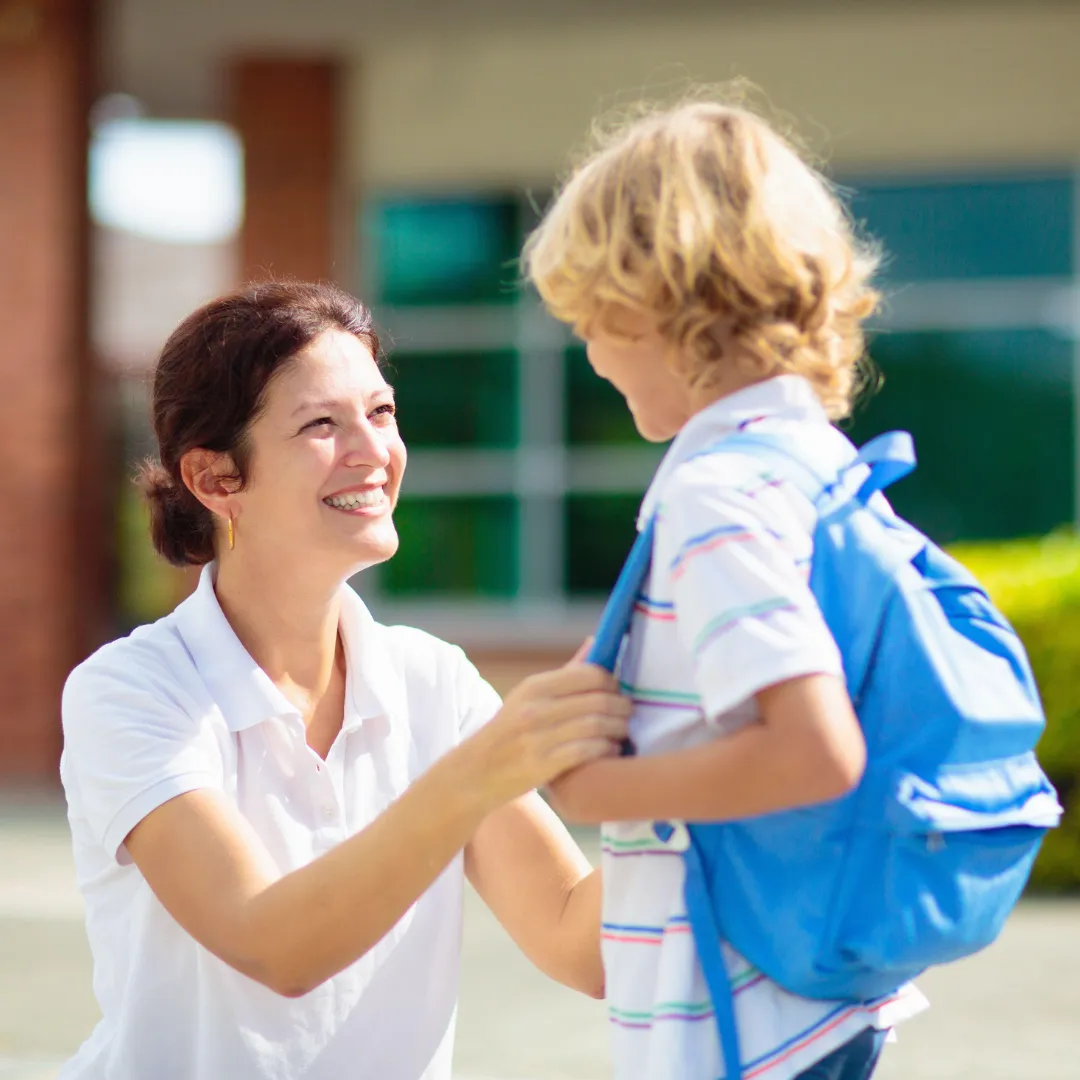
A child stands quietly at the gate.
An educator kneels beside them and says,
“You can stand with me until you’re ready.”
In that moment, the child feels
Safe.
Seen.
Like they belong.
This is what a resilient school looks like.
A simple and effective practical approach
1. Digital story and interactive-based learning
Introduces early learning concepts through engaging and relatable experiences. The program consists of engaging digital stories, memorable songs and printable resources to support deep learning.
2. Intentional teaching
Intentionally teaching and actively checking for understanding of the concept.
3. Play-based learning
Supporting children to understand and apply the concept meaningfully in everyday interactions through play.
4. Reinforced through intentional everyday moments
Children build confidence through repetition and real-life interactions.
5. Curriculum aligned
This program purposefully aligns with the Early Years Learning Framework and ACARA Personal and Social Capabilities.
6. Parent engagement pack
An easy guide for parents to support learning at home, which promotes early childhood centres communication with parents.
Resilient Schools promotes the foundation for early childhood social and emotional development through:
Explicit, step-by-step interactive activities
A Teacher handbook that guides teaching implementation and supports social and emotional learning
Storybooks, songs and hands-on learning
Fun and engaging ways of learning
What this creates for your centre is:
Children who feel safe, seen, and supported
Stronger emotional regulation and confidence
A shared understanding of early learning concepts
A shared language around identity, emotions, relationships and community
A culture of confident, resilient and empowered learners
A calmer, more connected learning environment
A strong alignment with the Early Years Learning Framework and ACARA Personal and Social Capabilities.
Based on research, experience, and proven practice
Resilient Schools is grounded in contemporary neuroscience, developmental psychology, and educational research. It draws on over 20 years of experience in early childhood education to create a practical, evidence-informed approach that is connected to the Early Years Learning Framework and ACARA's Personal and Social Capabilities.
Informed by research in emotional development and behaviour
Focused on prevention, not just responding to challenges
Designed for real-world implementation in early learning settings
Shifting Mindsets in Early Childhood
Why the way children think—early—shapes everything that follows
We often focus on what children can do.
Can they speak clearly?
Can they take turns?
Can they sit and listen?
But underneath every skill is something more powerful:
What they believe about themselves while they are learning.
Because before a child says,
“I can do this”
they have already decided
whether they can.
What is a mindset and why does it matter?
A mindset is the way a child thinks about:
Their abilities
Challenges
Mistakes
Effort
Thinking, emotions and beliefs about themselves
It is the quiet voice that shapes:
“I can try.”
“This is too hard.”
“I’ll get better.”
“I’m not good at this.”
And that voice?
It shapes everything.
Why early childhood is the most important time
Mindsets are not taught in one lesson.
They are built not day by day, but moment by moment.
Through:
Adult responses
Language used
Experiences of challenge
Opportunities to try again
Research from Carol Dweck shows that children begin forming beliefs about their abilities early and these beliefs become patterns.
And patterns become identity.
Children are always learning something deeper
Children are not just learning the task.
They are learning:
“Am I capable?”
“Is it safe to try?”
“What happens if I get it wrong?”
Children are not just learning skills they are learning who they are while they learn.
Mindset shapes behaviour
We often focus on what we see:
Avoidance
Frustration
Giving up
But behaviour is not random.
It is driven by belief.
If we only respond to behaviour, we miss the thinking underneath it.
Shifting mindsets: what actually works
Shifting mindset is not about telling children to “be positive.”
It is about what we consistently model, notice, and say.
Small shifts that make a big difference:
“You got it right” to “You kept trying”
“I can’t do it” to “You can’t do it yet”
“Do it like this” to “What could you try?”
“That’s wrong” to “What did you try there?”
Small language shifts. Big identity impact.
The Role of Storybooks in Shifting Mindsets
Shifting mindset is not only something we say it is something children need to see, feel, and explore.
This is where storybooks and concept books become powerful.
Stories create distance.
They allow children to:
See challenges through another character
Explore emotions safely
Understand thinking and choices
Recognise different perspectives
It’s Not Just About Identity
While mindset shape’s identity, its impact goes further.
Through intentional use of stories, children develop:
Emotional awareness
Engagement and persistence
Relationships and social understanding
Empathy and kindness
A sense of community and belonging
Stories bring these skills to life in ways direct instruction cannot.
Making Story Time Intentional
Reading a story is not the goal.
What we do around the story is what matters.
“What is the character thinking?”
“How do you think they feel?”
“What could they try next?”
“Have you ever felt like that?”
This is where mindset teaching happens.
The Role of Educators
Educators shape how children experience learning.
The Early Years Learning Framework (EYLF) reinforces this through:
Identity
Wellbeing
Communication
When we support mindset, we are supporting all three.
Why this matters long term
A child with a strong mindset is more likely to:
Persist
Engage
Take risks
Build confidence
Navigate challenges
This is not just about school.
It is about life.
Final Thought
We don’t need to wait until children struggle later to build resilience.
We can start now.
Through our language.
Through our responses.
Through our stories.
Because when we shift mindset early, we don’t just change how children learn
we change how they see themselves, others, and their place in the world.
Educator Guide: Using Storybooks Intentionally
Purpose
To support educators in using storybooks as a tool to explicitly teach:
Mindset
Emotional awareness
Social skills
Identity and belonging
Why Storybooks Work
Storybooks allow children to:
Explore emotions safely
See problems and solutions
Understand others’ perspectives
Build language for thinking and feeling
Stories make the invisible visible.
Before Reading
Set the intention:
What skill are we focusing on?
(e.g. persistence, empathy, trying again)
Prime thinking:
Today we are looking for how the character keeps going when things feel tricky.
During Reading
Pause and explore:
What is the character thinking?
How do they feel?
What is happening in their body?
What could they do next?
What do they belief about?
Focus on thinking, not just the storyline
After Reading
Make connections:
Have you ever felt like that?
What did you do?
What could you try next time?
Reinforce learning:
That’s what trying again looks like.
That’s being brave.
Extend the Learning
Bring it into the day:
Refer back to the story
→ “This is like when the character kept trying”Use consistent language
→ “You’re having a ‘keep trying’ moment”Link to real experiences
Intentional Teaching Focus (EYLF Links)
Supports:
Outcome 1 → Identity (confidence, agency)
Outcome 3 → Wellbeing (emotional regulation)
Outcome 5 → Communication (expressing thoughts and feelings)
Key Educator Shift
From:
Reading a story
To:
Teaching thinking, feeling, and relating through story
Simple Prompt Framework
Think – Feel – Do – Connect
What do they think?
How do they feel?
What do they do?
How is this like you?
Final Message for Educators
Storybooks are not just for literacy.
They are one of the most powerful tools we have to teach:
how to think
how to feel
how to relate
starts formulating our beliefs.
And ultimately, how to see themselves in the world.

Empower every child to thrive in a resilient learning environment for now and in the future..
Create a culture of confident, resilient and connected learners today.
Partner today with Resilient Schools
Shaping resilient, connected learning communities from the early years
© The Resilient Schools
[email protected]
www.theresilientreader.com.au
Privacy Policy | Terms & Conditions

