
The aim of Resilient Schools is to strengthen the social and emotional foundations children need to thrive in learning and life.
A practical, concept-based approach that engages early learning centres in nurturing every child's emotional well-being and resilience from the earliest stage of life.
Supporting Children's social and emotional development has never been more important!
Resilient Schools focuses on the unseen skills of learning, thinking, emotions, behaviours and attitudes.
This new of engaging shapes how children respond to challenge and every experience they have.
Educators support emotional regulation, behaviour, and social development, sometimes without clear, practical tools that fit into everyday learning.
What if we started intentionally teaching children the skills of...
Confidence
Wellbeing
Connection
Resilience
Resilience begins in the early years through connecting with the childrens:
Identity
Developing self-awareness through personal strengths
Emotional Awareness
Every interaction shapes how a child feels and responds.
Classroom participation
Active Engagement in and with learning
Relationships
Connecting through friendships and social engagement
Empathy & Kindness
Caring & Helping Others
Community & Belonging
Feeling connected and part of a group
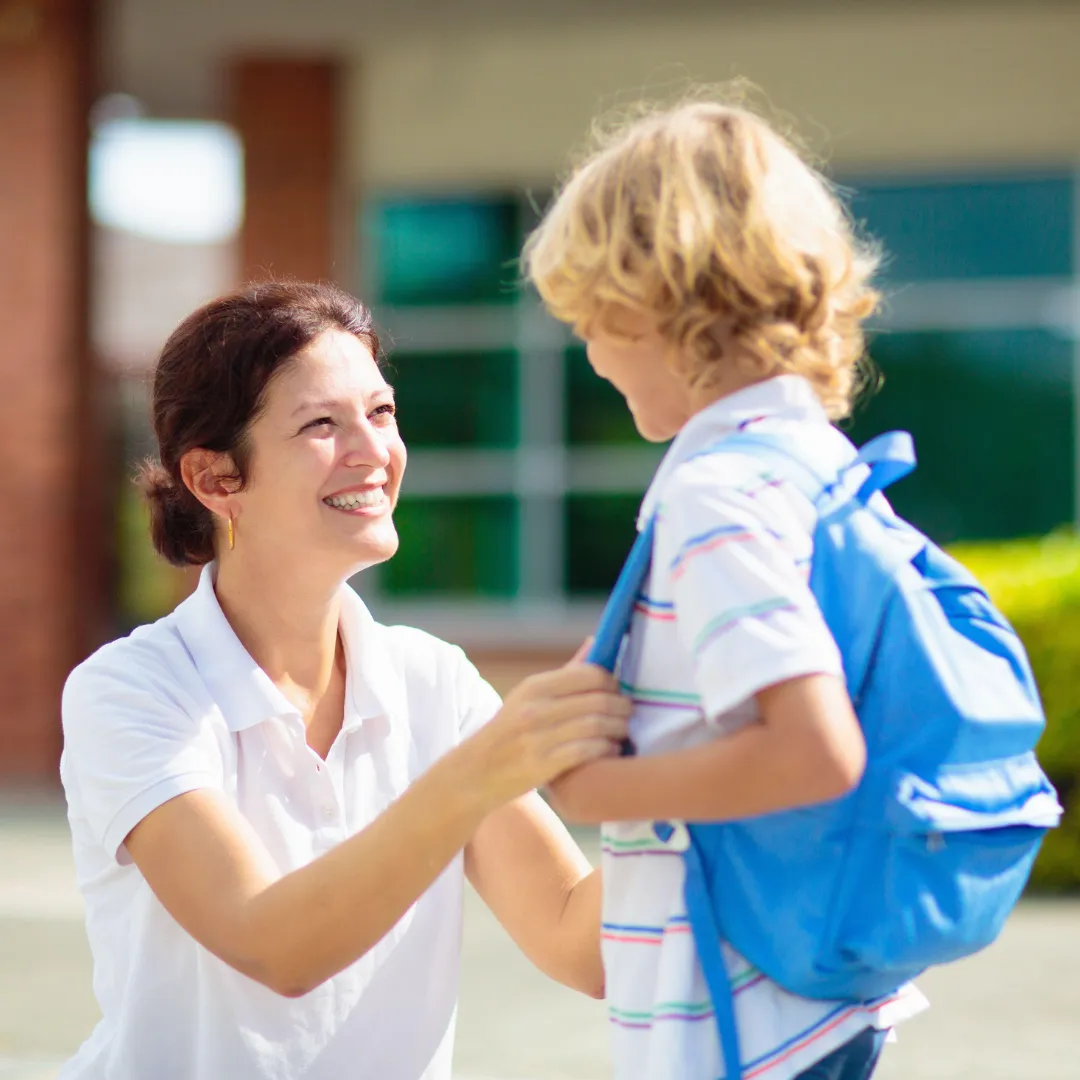
A child stands quietly at the gate.
An educator kneels beside them and says,
“You can stand with me until you’re ready.”
In that moment, the child feels
Safe.
Seen.
Like they belong.
This is what a resilient school looks like.
A simple and effective practical approach
1. Digital story and interactive-based learning
Introduces early learning concepts through engaging and relatable experiences. The program consists of engaging digital stories, memorable songs and printable resources to support deep learning.
2. Intentional teaching
Intentionally teaching and actively checking for understanding of the concept.
3. Play-based learning
Supporting children to understand and apply the concept meaningfully in everyday interactions through play.
4. Reinforced through intentional everyday moments
Children build confidence through repetition and real-life interactions.
5. Curriculum aligned
This program purposefully aligns with the Early Years Learning Framework and ACARA Personal and Social Capabilities.
6. Parent engagement pack
An easy guide for parents to support learning at home, which promotes early childhood centres communication with parents.
Resilient Schools promotes the foundation for early childhood social and emotional development through:
Explicit, step-by-step interactive activities
A Teacher handbook that guides teaching implementation and supports social and emotional learning
Storybooks, songs and hands-on learning
Fun and engaging ways of learning
What this creates for your centre is:
Children who feel safe, seen, and supported
Stronger emotional regulation and confidence
A shared understanding of early learning concepts
A shared language around identity, emotions, relationships and community
A culture of confident, resilient and empowered learners
A calmer, more connected learning environment
A strong alignment with the Early Years Learning Framework and ACARA Personal and Social Capabilities.
Based on research, experience, and proven practice
Resilient Schools is grounded in contemporary neuroscience, developmental psychology, and educational research. It draws on over 20 years of experience in early childhood education to create a practical, evidence-informed approach that is connected to the Early Years Learning Framework and ACARA's Personal and Social Capabilities.
Informed by research in emotional development and behaviour
Focused on prevention, not just responding to challenges
Designed for real-world implementation in early learning settings
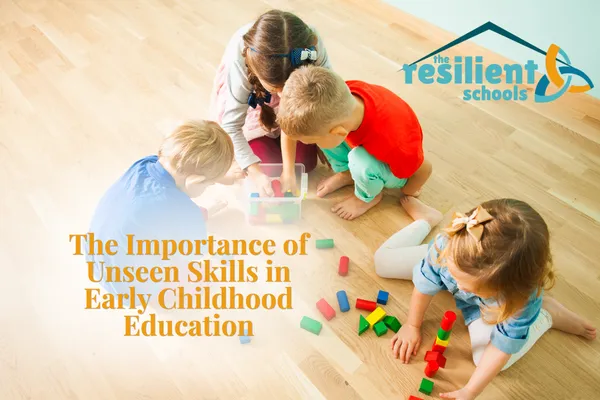
The Importance of Unseen Skills in Early Childhood Education
Why mindset, emotional development, and thinking shape lifelong learning
We are very good at teaching what we can see.
Letters.
Numbers.
Routines.
Behaviour.
But what if the most important learning in early childhood… is the part we can’t see?
Because underneath every “refusal,” every “meltdown,” every “lack of engagement”
is not just behaviour:
it’s thinking.
it’s emotion.
it’s identity forming in real time.
And yet…
these are the skills we spend the least time intentionally or explicitly teaching.
We manage behaviour.
We redirect actions.
We guide routines.
But we rarely stop to ask:
What is this child learning about themselves right now?
Because children are not just learning how to behave.
They are learning who they are.
What Are Unseen Skills in Early Childhood?
Unseen skills are the internal processes that shape how children learn, behave, and interact.
They include:
Emotional development
Self-regulation
Mindset and beliefs
Thoughts and self-talk
Confidence and identity
Resilience and persistence
Social awareness and relationships
Decision-making
These are often referred to as social and emotional skills in early childhood, and they sit beneath everything we see.
The most important learning in a classroom is often the part we cannot see.
Why Unseen Skills Matter for Learning
The Early Years Learning Framework (EYLF) doesn’t place social and emotional development alongside learning it places it underneath it.
Identity (Outcome 1), Wellbeing (Outcome 3), and Communication (Outcome 5) are not separate goals.
They are what make learning possible.
Because before children can engage, achieve, or persist they need to feel:
Seen
Safe
Capable
Regulated
Capable
Belong
A quiet child is not always a confident learner, and compliance is not the same as capability.
The Science Behind Unseen Skills
Research shows that learning is deeply connected to thinking, emotion, and belief.
Albert Bandura: Self-belief impacts motivation and persistence
Carol Dweck: Mindset shapes response to challenge
Daniel Goleman: Emotional intelligence supports focus and relationships
Centre on the Developing Child Harvard University: Relationships build brain architecture for regulation
Together, this research reinforces one key idea:
Behaviour is not the problem; it is the surface of something deeper.
The Link Between Thoughts, Emotions, and Behaviour
What children think influences how they feel.
How they feel influences what they do.
“I can’t do it.” Leads to frustration which leads to giving up
“I’ll try again.” Leads to determination which leads to keeping going
This is why mindset matters.
If we don’t teach the thinking behind the behaviour, we will always be managing the behaviour itself.
Unseen Skills Shape Identity
Children don’t just learn skills.
They are learning who they are while they learn.
Through everyday interactions, they build internal beliefs:
“I am capable”
“I can try”
“I belong”
This aligns with Lev Vygotsky, who emphasised that learning and identity develop through social interaction.
Every moment matters.
Every interaction teaches a child something about themselves, whether we intend it or not.
The Role of Educators in Developing Unseen Skills
Educators are not just guiding behaviour.
They are shaping how children:
Think
Feel
Respond
Engage
The EYLF highlights intentional teaching, where educators actively support children’s learning processes.
This includes:
Feeling the emotions
Modelling thinking
Using the language of problem-solving
Acknowledging effort over outcome
When children don’t have the words for what they feel, their behaviour does the talking.
Making Unseen Skills Visible in Practice
When we intentionally teach these skills, children begin to:
Understand their emotions
Manage challenges
Build resilience
Strengthen relationships
Engage more confidently
Over time, this leads to:
Increased engagement
Stronger relationships
Greater independence
Improved learning outcomes
These are not small outcomes.
They are the foundation of learning.
Why This Work Matters
Educators are expected to support behaviour, emotions, and learning often all at once.
But it is not that educators don’t care.
It is that these skills are not always explicitly taught, named, or supported with a shared language.
This is where the shift happens.
From managing behaviour to understanding it
From reacting to intentionally teaching
From surface-level responses to deeper impact
Small Shifts, Lasting Impact
Unseen skills are not developed through one lesson.
They are built through:
Daily interactions
Intentional language
Consistent support
Reflective practice
Small shifts create powerful change over time.
Final Thought
The most important learning is not always what we can see.
It is what children carry within them.
Because when we focus on the unseen skills,
we are not just supporting development
we are shaping identity, confidence, and lifelong capability.

Empower every child to thrive in a resilient learning environment for now and in the future..
Create a culture of confident, resilient and connected learners today.
Partner today with Resilient Schools
Shaping resilient, connected learning communities from the early years
© The Resilient Schools
[email protected]
www.theresilientreader.com.au
Privacy Policy | Terms & Conditions

